The 12 color seasons explained: names, neighbors and 16-season types
Every color season is shorthand for three readings of your natural coloring. Learn what those readings are and how they combine, and the twelve names stop sounding like poetry: Soft Autumn says a coloring is muted first and warm second, Bright Winter that it is vivid first and cool second.
This guide takes the system apart: the three dimensions, how four families split into twelve, what the three seasons of each family share, why neighboring seasons get mixed up, where the alternative names and sixteen-season systems fit, and what happens in a draping session.
Three dimensions: hue, value and chroma
Color theory describes any color by three properties, and seasonal analysis reads a face the same way. Hue is the color family and its temperature: whether your skin, eyes and hair lean golden and peachy, which is warm, or pink and bluish, which is cool. That lean is your undertone. It sits beneath the surface tone of your skin, so a tan or a pale winter changes how dark you look but not which way you lean.
Value is lightness: how light or deep your coloring is overall. It is read across hair, skin and eyes together, so a fair person with very dark hair and eyes reads deeper than the skin alone suggests. Chroma, also called clarity or saturation, is how pure your coloring looks. Clear coloring has crisp edges and eyes that sparkle against their whites; soft coloring blends, as if seen through a light haze.
The three are independent of each other. A coloring can be warm, light and clear at once, or cool, deep and soft. A season is a named combination of the three, and its palette repeats your readings in fabric: colors that share your temperature, sit near your depth and match your clarity look as if they belong next to your face.
How four families become twelve seasons
The older four-season system gives each family two fixed traits. Spring is warm and clear, Summer cool and soft, Autumn warm and soft, Winter cool and clear. Depth follows: springs and summers tend light, autumns and winters tend deep. Four boxes leave many people between two of them, though, and that gap is what the twelve-season system closes.
Twelve seasons keep the four families and split each into three by its dominant trait, the reading that stands out most in a face. Spring becomes Light, Warm and Bright Spring; Summer becomes Light, Cool and Soft Summer; Autumn becomes Soft, Warm and Deep Autumn; Winter becomes Deep, Cool and Bright Winter. The first word names the dominant trait, and the family supplies the second one.
Other systems use other words for the same twelve. The center of each family, where temperature leads, is often called True: True Spring is Warm Spring, True Summer is Cool Summer, True Autumn is Warm Autumn, and True Winter is Cool Winter. Dark stands for Deep, as in Dark Autumn and Dark Winter, and Clear stands for Bright, as in Clear Spring and Clear Winter.
Sixteen-season systems go one step further and give each family a fourth type. They read the same undertone, depth and clarity in finer steps, so every extra type describes a coloring between two of the twelve. If a sixteen-season analysis typed you, the twelve-season palette that shares your dominant trait is the nearest match.
The springs: warm and clear
All three springs share a warm undertone and a fresh, clear quality; the trait that leads tells them apart. Light Spring puts lightness first and is the most delicate of the family. Warm Spring is its center, as golden as a spring gets, at a medium depth. Bright Spring puts clarity first, with more contrast and saturation than the other two, and borders on the winters.
The family resemblance shows in the palettes. No spring wears greyed or dusty colors well, and the whites that suit them are warm ones, from warm ivory to a clean off-white. What changes from one spring to the next is intensity: peach and butter yellow at the light end, poppy red and kelly green at the bright end.
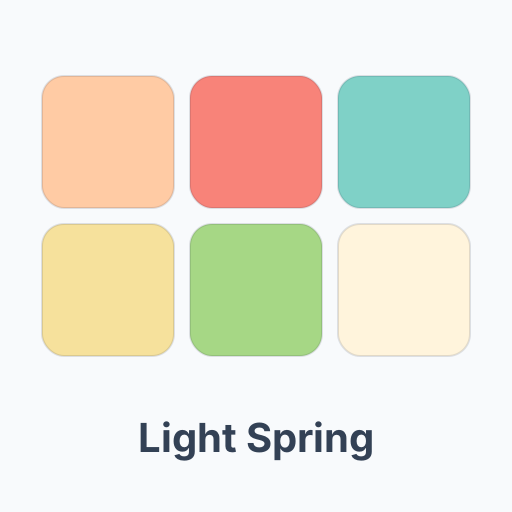
Light Spring
Light Spring shows the spring family at its gentlest: peach, light coral and butter yellow, all light and warm, with nothing deeper than a medium tone. Hold it against the Bright Spring palette and you see what changes when clarity leads instead: the warmth stays, the intensity rises sharply.
Try it on me →The summers: cool and soft
The summers share a cool undertone and a soft, slightly greyed quality. Light Summer leads with lightness and is the airiest of the three. Cool Summer is the center, the most clearly blue-based summer, at a medium depth. Soft Summer leads with softness: its coloring is so blended that it borders the autumns, and its palette carries the most grey.
What ties the summers together is restraint. Their colors have a cool cast and never reach the saturation of a winter palette or the golden warmth of a spring. In practice that means rose instead of orange-red, slate and soft navy instead of black, and silver or pewter where a spring would wear gold.
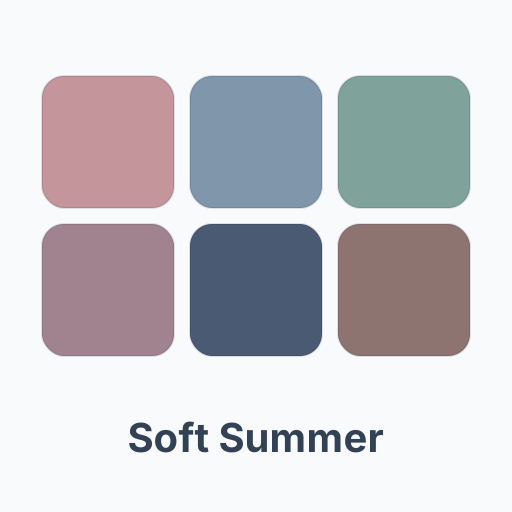
Soft Summer
Soft Summer shows how far a dominant trait can pull a season from its family. Dusty rose, sage and mauve are summer colors with grey mixed in, which makes this the summer that sits closest to the autumns.
Try it on me →The autumns: warm and soft
The autumns share a warm undertone and an earthy, muted richness. Soft Autumn leads with softness and is the gentlest autumn, bordering Soft Summer. Warm Autumn is the center, golden and rich at a medium to deep level. Deep Autumn leads with depth: the darkest and most dramatic autumn, with enough contrast to border the winters.
Across all three, the colors look as if they came from nature rather than a dye works: spice, moss, earth and wood. Gold, bronze and copper suit the family, and cream or ivory replaces pure white. The differences are in weight, from camel and dusty peach at the soft end to burnt orange and deep teal at the deep end.
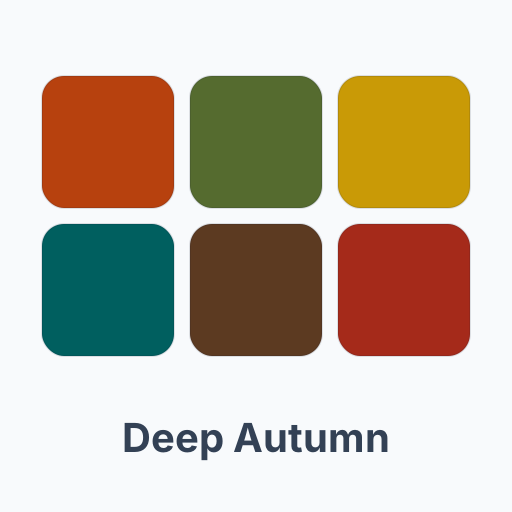
Deep Autumn
Deep Autumn shows the family at its heaviest. Depth leads and warmth follows, so burnt orange, deep olive and brick red have the weight of a winter palette while staying golden.
Try it on me →The winters: cool and clear
The winters share a cool undertone and high contrast, the most striking coloring of the four families. Deep Winter leads with depth and borders Deep Autumn. Cool Winter is the center, as cool as Cool Summer but clear and high in contrast. Bright Winter leads with clarity and borders Bright Spring.
Winters are the seasons that carry black and pure white, and they need colors with enough intensity to match the contrast in the face: jewel tones, icy near-whites and saturated primaries. Muted, earthy colors are where every winter struggles, because softness flattens a face that is built on contrast.

Deep Winter
Deep Winter is the winter where depth leads, and its palette shows the family's taste for contrast: emerald, sapphire and crimson at full saturation, with both black and pure white included. On this coloring a black-and-white outfit looks finished rather than severe.
Try it on me →Neighboring seasons, and why you might get two answers
Every season has a neighbor in another family that shares its dominant trait. Light Spring and Light Summer are both light first, Soft Summer and Soft Autumn both soft first, Deep Autumn and Deep Winter both deep first, Bright Winter and Bright Spring both bright first. The family centers pair up by temperature: Warm Spring with Warm Autumn, Cool Summer with Cool Winter.
Neighbors differ in their second reading only. For the light, soft, deep and bright pairs that is the undertone; for the warm and cool pairs it is clarity. Their palettes overlap at the edges, which is the main reason two analyses can disagree: if your dominant trait is obvious but your undertone is close to neutral, one analyst sees Soft Summer, another Soft Autumn, and both palettes look acceptable on you.
The conditions shift the result too. A warm lamp pushes a reading toward the warm seasons, shade or a cold screen toward the cool ones, and makeup, self-tanner, a summer tan or dyed hair change what anyone sees. The system matters as well: a four-season reading can only say Autumn where a twelve-season reading says Soft Autumn.
If you get two answers, trust the trait both agree on and wear the colors their palettes share. Then test the disputed reading in daylight: gold against silver, or ivory against pure white, for undertone; a vivid color against a greyed version of it for clarity. A second reading from a fresh selfie in the color analysis quiz is another quick check.
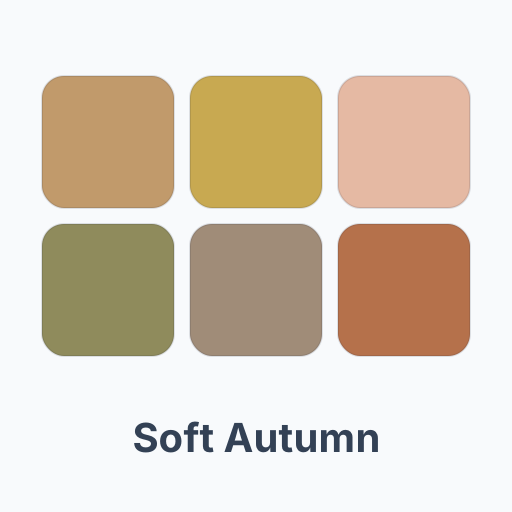
Soft Autumn
Soft Autumn is the other half of the pair people confuse most. Its camel, muted mustard and khaki olive share the greyed softness of Soft Summer but carry warmth instead of a cool cast, so the two palettes meet in colors like warm taupe and rose brown.
Try it on me →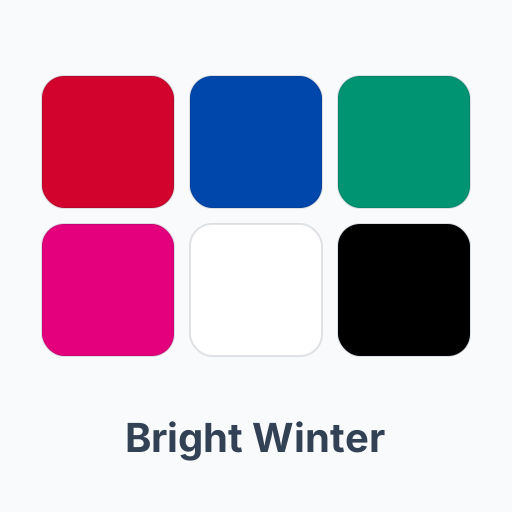
Bright Winter
Bright Winter is the cool half of the bright pair. It shares the clarity and contrast of Bright Spring, so both wear saturated color, but its true red, cobalt and hot pink lean blue where hot coral and sunflower yellow lean gold.
Try it on me →What draping is and how a season gets read
Draping is the traditional way to read a season in person. You sit in daylight or under daylight-balanced lamps, without makeup, with your hair under a neutral cap and your clothes under a white or grey cape. The analyst holds large fabric drapes under your chin one at a time, usually in pairs that differ in one reading: a warm red against a cool red for undertone, a light and a deep version of a color for value, a vivid and a muted one for clarity.
The analyst watches your face, not the fabric. The right drape makes the skin look even, softens shadows under the eyes and around the mouth, and makes the eyes look clearer. The wrong one shows as sallowness, redness, grey shadows or a face that seems to fade behind the color. Pair by pair, the losing drapes rule out families until one season is left.
The free color analysis reads the same evidence from one daylight selfie: your skin, the whites and irises of your eyes, your lips and your natural hair color, weighed together for undertone, depth and clarity. The seasonal color analysis page lays out all twelve palettes side by side, and what season am I takes you through finding yours. Once you know your season, putting its colors together is the next step, and the guide to combining colors in outfits shows how.
FAQ
What is the difference between the 4-season and the 12-season system?
The four-season system gives each family two fixed traits and stops there. The twelve-season system splits each family into three by the dominant trait, which places people who sit between two families.
What does True mean in True Summer or True Winter?
True marks the center of a family, the season where temperature leads. True Spring is Warm Spring, True Summer is Cool Summer, True Autumn is Warm Autumn and True Winter is Cool Winter.
Are Dark Autumn and Deep Autumn the same season?
Yes. Dark and Deep are two names for the same dominant trait, so Dark Winter is also Deep Winter. Clear and Bright are interchangeable in the same way.
What is 16-season color analysis?
A system that gives each of the four families a fourth type. It reads the same undertone, depth and clarity as the twelve-season system, only in finer steps.
What does chroma mean in color analysis?
Chroma is how saturated a color is, from pure and vivid to greyed and muted. In a face it shows as clarity: bright seasons have crisp, high-contrast coloring, soft seasons a blended, muted look.
Does skin tone decide your color season?
No. Fair and deep skin can belong to any of the twelve seasons, because the season comes from undertone, from depth across hair, skin and eyes, and from clarity, not from how light the skin is.
Why do two color analysts give me different seasons?
Usually because you sit near the edge between two neighboring seasons that share a dominant trait. Lighting, makeup, dyed hair and the system used, four, twelve or sixteen seasons, can also shift the reading.
Can your color season change over time?
Your undertone usually stays the same through adult life. What can change is contrast: as hair turns grey or white, some people look better in the softer or lighter colors of their palette, while the season itself usually stays.